Spring Seasonal 2025

"I thought this was an iris farm?"

It IS a farm, that specializes in iris. But we also love most plants, even some of the ones that we struggle mightily to eliminate because they teach us things about the soil and the land that we manage.

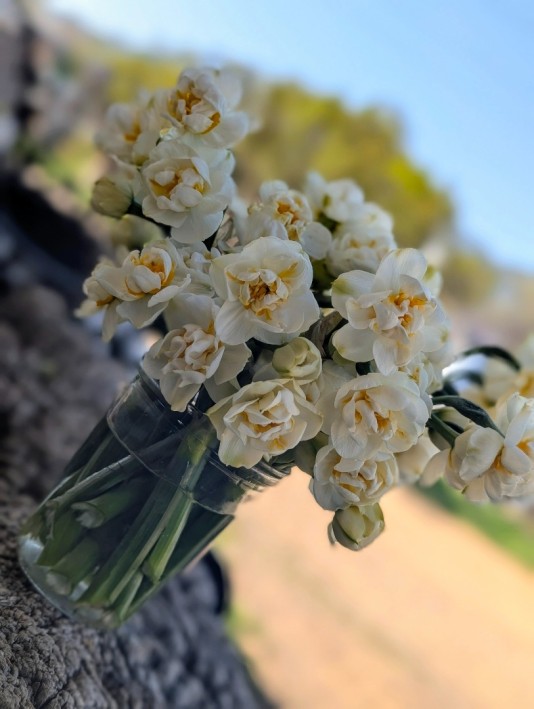
Narcissus 'Bridal Crown' (above) is one of those plants that we don't struggle to eliminate and will definitely be encouraging in the future. When color is on everyone's mind but even the green-up is taking its sweet time, narcissus lets us know that soon everything will explode with life, but not yet.

And perhaps that's the theme of this newsletter, patience. It's been nearly six months since the last one and yet technically only one season later. Beginning of winter to the end of spring and here we are, world's away from the annual garden dreams, grey skies, and general feeling of rest. But perhaps it is fitting that we've received multiple requests (or perhaps yearnings is more suitable here) for the Spring newsletter to which patience has most certainly been a common response. Patience for the slow green up in a dry late winter and early spring. Patience for native species in our prairie strip to show their foliage (knowing smartly that Colorado springs are most likely described as seriously schizophrenic) and that there is no rush. Patience for Baptisia australis to germinate from seed which the packets describe as "Inconsistent" but I would certainly add some select other adjectives. Patience for new life to figure out how to survive in a world that is shifting rapidly, everywhere. And patience for these words to find their way onto your screen.

What if you have no patience?

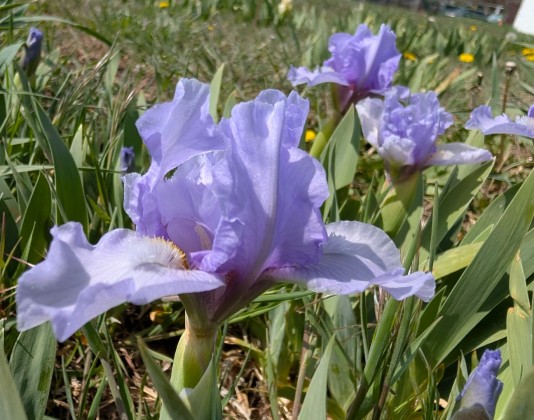
What if, like Just Mist (SDB) above, you decide to bloom in mid-April only to be reminded that a snow blanket that arrives after a hard frost is no blanket at all. Luckily, most of the SDBs are such vigorous growers that they simply move on from their first set of blooms and send out a second and third flush after the frost like nothing ever happened. As an iris lover, perhaps you see a break in color and a less 'full' look. But for an appreciative anthophile, an admirer of April's antics, are you also seeing the ability to return to form after what may be a death sentence for some overly ambitious bloomers?

Another theme perhaps for the newsletter this spring is resilience. I add this with a specific consideration to the marigolds that were planted close by some dahlias to deter aphids but were deprived of water for two days after in 80-90 degree heat. Two days of deep watering and those fragile annuals - that even I admittedly don't have great appreciation for - bounced back with an orange chuckle.

Patience for what is coming, resilience for when it doesn't.

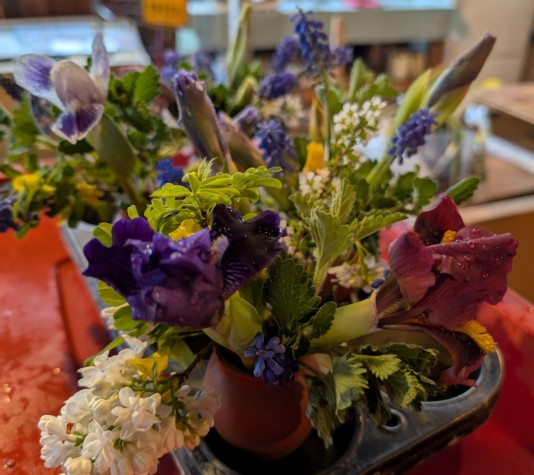
Who knew that we sold bud vases this year? With our early bloom looking more like a half-finished Jackson Pollak as opposed to an organized effort, our considerations turned to the future and how we might bring our love of iris, even its most fleeting form (cut) to you. These bud vases were certainly one way and perhaps the first step in a larger cut flower endeavor. Also, creating on a micro scale certainly affects one's ability to use space as an element. All in all, these were fun to make, enjoyable to hunt for filler and foliage for, and received well by those wanting a little more iris in their life.

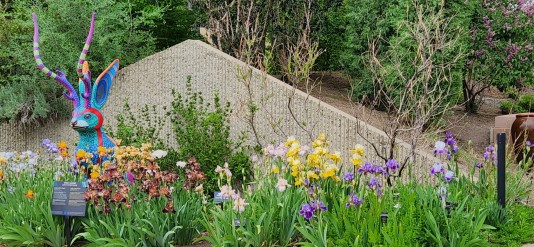
Photo credit: Amy Schneider, Denver Botanic Gardens

Thanks for sharing some of your iris photos after the last newsletter! They're saved so if you don't see yours immediately, don't be heartbroken. We're not overly particular judges on photography, we just choose as the wind might choose to deposit a fluttering seed. Here, this looks a nice place to root down. Taking hold and growing large, yet another lesson in resilience.

"What a lesson in ecology back there..."

The headlining statement of a conversation on farm a few weeks ago as the first forays into the prairie strip on our back drive started to yield weeding plans, plants to add, and general considerations for what is a rather large planting. The statement on ecology was an observation as to how some species were taking hold, pushing through the overwhelming pressure of less desirable, 'weedy' species. The true species varieties of achillea, rudbeckia, and monarda asserting their place. The once and twice removed hybrids and selected cultivars struggling to dominate, some quite on the edge of giving up. A little weeding here, a bit of pulling there. Some higher value plants are protected purely as to not waste money. Some attractive, but generally easy to seed selections may just be left to fend for themselves. Although we are Long's Gardens, our methods certainly lean far towards the agroecogical side of intervention. There's only so many resources available to tend to every. single. plant. In about a month, there is going to be a carpet of color on our back drive, and the hum of native and honeybees alike will be ever present as more flowers bloom and more stages of life fill into their summer spark. If you're local, swing on by and check it out. You can always ask for a brief tour too, assuming we're in proximity.

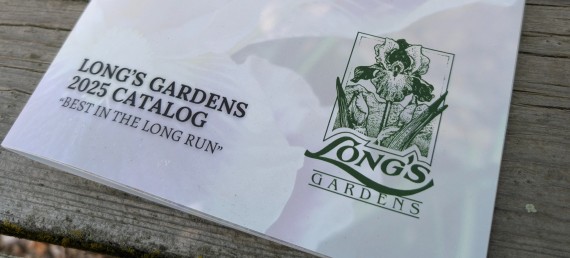
It's been some years since we've had a print catalog, even longer that we've had one in full color with imagery. Printing is prohibitively expensive these days but on-demand services make it easy and cheap enough to have this offering available. We got it out late this year and the online store will always be the most up-to-date, but for those of you who prefer the hand feel of paper stock instead of mouse clocking, this is an option. We'll keep the cost down as best we can to keep it going and at the very least, this season, you've got a start on next year's catalog that you can reference without opening your computer. Perhaps there's a hidden coupon in the print version too, who can say?

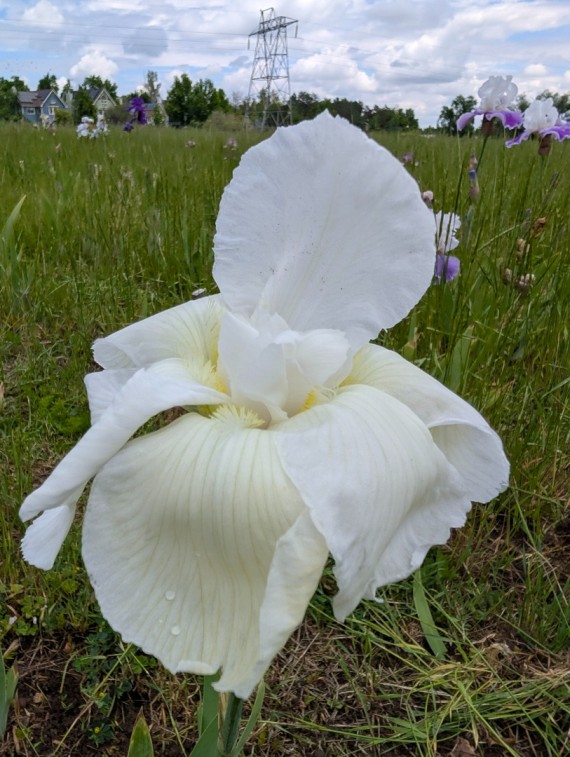
Take a seat with Flopsy (TB), one of our flowering farm favorites. A novelty form, it opens flat but I was able to catch it with just one of its standards in chair form still. Was hoping to catch a bee lounging on its back but alas, no luck this time.

Until we read again, iris lovers.


Long's Gardens
PO Box 19
Boulder, CO 80306-0019
(303) 442-2353

 Web  Instagram

Long's Gardens is a third generation, family-owned and operated iris farm in the middle of Boulder, Colorado. You can browse our online store here.

This email was sent to by Long's Gardens.

You are receiving this email because you have subscribed to mailings from Long's Gardens. You may update your subscription preferences anytime. You may also unsubscribe from this mail list, or opt-out entirely if you no longer wish to receive bulk email from Long's Gardens.